Not every piece of land clears the same way. The right method depends on what’s growing, how you plan to use the land, and what you want the property to look like when the work is done. There are five main types of land clearing methods — and picking the wrong one can cost you time, money, and soil health.
Here’s a breakdown of each method, what it’s best for, and how we think through the choice with property owners before a single machine rolls on-site.
Why the Method Matters Before Any Machine Arrives
At All Pro Land Clearing, the first call we get is usually something like: “I need my lot cleared — can you come out?” What most people don’t realize is that two lots of the same size can need completely different approaches. A half-acre covered in Brazilian pepper and vines clears differently than a half-acre with mature live oaks and deep root systems.
Choosing the wrong method can strip topsoil, leave stumps that prevent grading, or create a debris mess you still have to pay someone to haul away. If you want to understand all the factors that go into a clearing project, timeline, permits, and total cost, our complete guide to land clearing walks through everything from start to finish.
Below, we’re focusing on one specific decision: which clearing method fits your property
The 5 Main Types of Land Clearing Methods
Mechanical Clearing (Dozing and Grubbing)
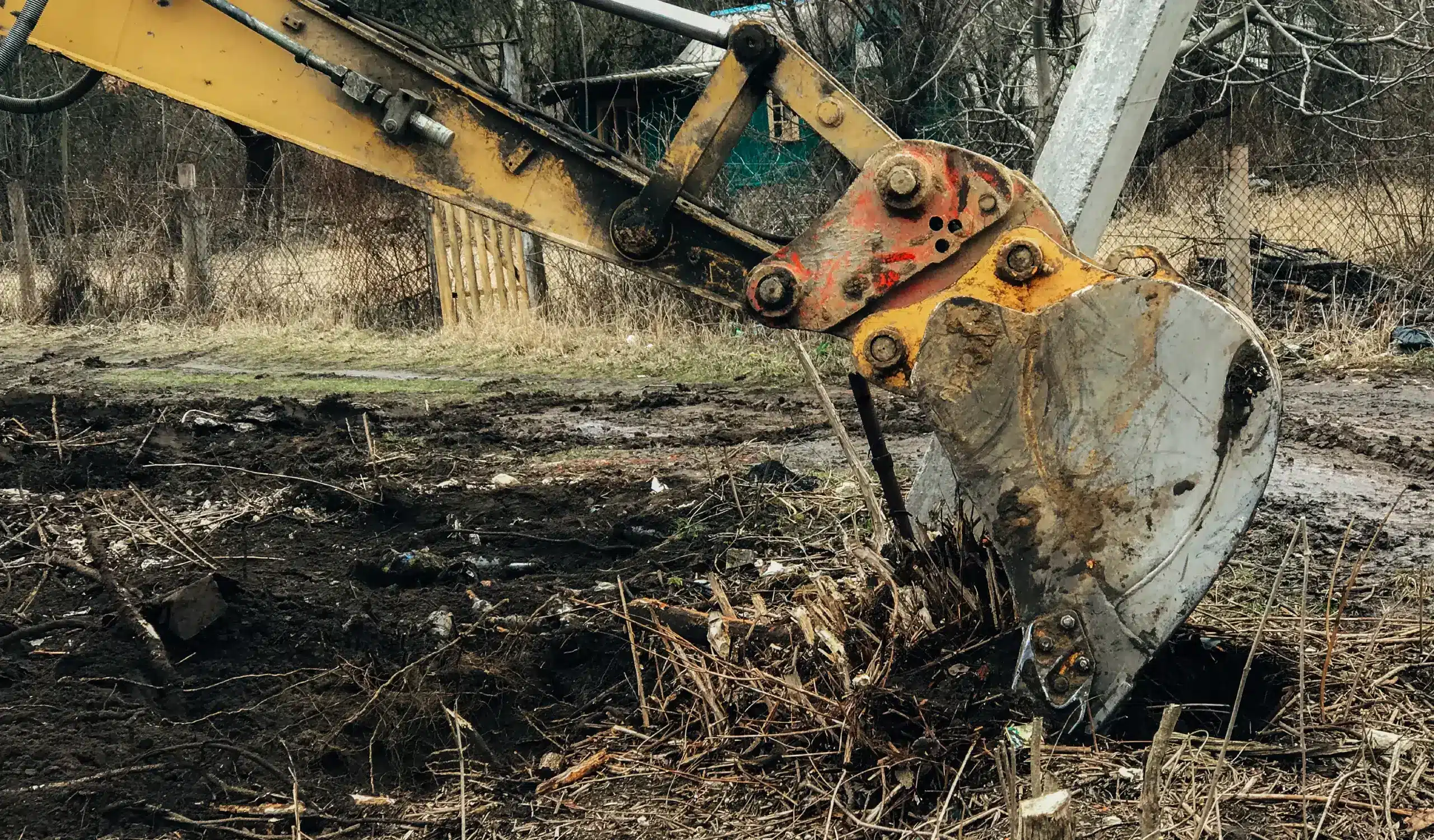
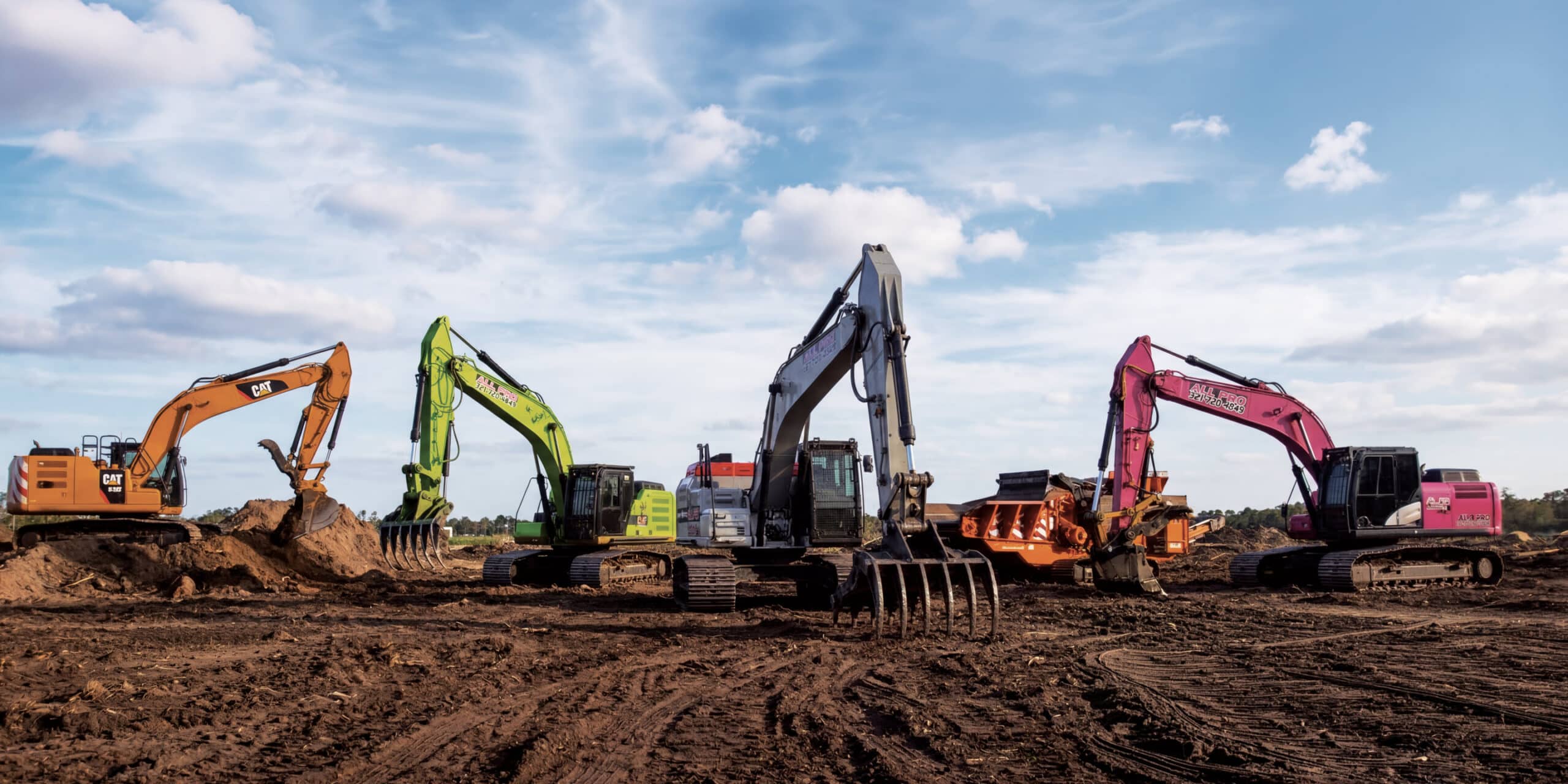
Mechanical clearing uses heavy equipment — bulldozers, excavators, and root rakes — to push, pull, and dig out trees, stumps, and vegetation down to the root level. It’s the most thorough method available and leaves land that’s ready for grading and construction almost immediately.
What is mechanical land clearing best for? Mechanical clearing works best for large-scale projects where the land needs to be fully stripped: construction sites, new builds, agricultural development, and anything requiring a clean building pad with no root systems left behind. Most of our residential lot clearing work in Palm Bay falls into this category.
The trade-off is soil disruption. Pushing and grubbing moves a lot of earth, and without proper erosion control follow-up, bare soil on a Florida property can erode quickly during rain season. This method also generates a significant debris pile that needs to be hauled, burned, or chipped separately.
Pro Tip: If you’re building a structure with a concrete slab or foundation, mechanical grubbing is often the only method that fully removes root systems from the building footprint. A forestry mulcher can handle the brush, but deep stumps need grubbing.
Forestry Mulching
Forestry mulching is one of the most popular methods we use on Florida properties, and for good reason. A single machine equipped with a rotating drum and carbide teeth grinds trees, brush, and stumps directly into mulch on the ground. Nothing gets hauled away. Our forestry grinding crews run this work daily across Brevard County.
The mulch layer stays on the ground, reduces erosion, and breaks down over time to add organic matter back to the soil. For properties where soil preservation matters — acreage, wooded lots, land you’re not immediately building on — mulching is often the smarter play.
How fast does forestry mulching work? A forestry mulcher can clear 1–5 acres per day depending on vegetation density, terrain, and machine size. A skid steer on a light brush job sits on the lower end; a large dedicated mulcher on open ground can push toward the higher end. That speed, combined with a single-machine setup, typically makes it more cost-effective than methods requiring multiple passes or debris removal crews.
One honest limitation: mulching doesn’t fully eliminate deep stump root systems. If you’re preparing a pad for construction, you may need grubbing on the building footprint specifically. We often use mulching on the surrounding acreage and targeted grubbing where the structure goes. A lot of real-world clearing projects use both methods — the combination gets you the efficiency of mulching on brush-dominant areas and the thoroughness of mechanical grubbing where the structure goes.
Did You Know? Forestry mulching is an effective first-strike tool for controlling woody invasives like Brazilian pepper on Florida properties, but it’s not a standalone solution for species that resprout aggressively from roots. According to UF/IFAS research on Brazilian peppertree control, the species regrows readily from surviving root material, and cogon grass, which spreads primarily through underground rhizomes, can be worsened by mechanical disturbance if rhizome fragments are scattered. For these species, mulching is typically followed by targeted herbicide treatment to suppress regrowth.
Controlled Burning (Prescribed Fire)
Controlled burning involves intentionally igniting vegetation under specific weather and safety conditions to clear large areas quickly. It’s a legitimate land management tool used in agriculture and forestry — and in Florida, it’s regulated by the Florida Department of Agriculture and Consumer Services through the Florida Forest Service.
Controlled burning can effectively eliminate invasive species and reduce wildfire risks in high-risk areas. However, it requires an authorization from the Florida Forest Service prior to any burn, along with adherence to wind and weather requirements and, for larger operations, a certified prescribed burn manager.
Is controlled burning a good option for residential land clearing? Generally, no. Land clearing burns in Brevard County require a burn authorization from the Florida Forest Service before any work begins, plus firebreaks, suppression equipment on hand, and compliance with wind and timing requirements. For most residential and commercial lot clearing, this method isn’t practical, and many municipalities have additional local restrictions.
If you have significant acreage and are working with a forestry management plan, burning might be part of the conversation. For most property owners, the safer play is mechanical firebreak mitigation, which reduces fuel load without an open flame.
Manual Clearing
Manual clearing means hand tools — chainsaws, axes, brush cutters, and grubbing hoes used by a crew on foot. It’s precise, low-impact, and useful for situations where you need to clear selectively without disturbing the surrounding vegetation.
For small properties, manual clearing may be sufficient on its own. Vegetation type matters too — dense brush, small trees, and weeds can often be cleared with lighter methods, while large trees and deep stumps may require mechanical clearing or grubbing.
Manual clearing is also the right call around structures, utilities, or fencing where heavy equipment can’t safely operate. We use hand crews regularly for fence line cleanup, work near wells and septic systems, and selective clearing around trees the property owner wants to keep.
The limitation is obvious: labor-intensive work doesn’t scale. For anything beyond a small area, manual clearing alone is slow and expensive compared to machine-based methods.
Pro Tip: Manual clearing combined with a mechanical pass afterward is a common sequence on properties with specimen trees or mature landscaping. The hand crew works around the keepers; the mulcher handles everything else.
Chemical Clearing (Herbicide Treatment)
Chemical clearing uses targeted herbicide applications to kill unwanted vegetation at the root level. It’s commonly used for nuisance vegetation removal, right-of-way maintenance, and situations where mechanical access is limited.
This method works well for controlling regrowth after initial mechanical clearing, treating invasive species that resprout aggressively, or managing vegetation along fence lines and property borders between clearing cycles.
Chemical clearing is not a standalone solution for development projects — it doesn’t remove the physical plant material, just kills it. But as part of a maintenance plan, or as a follow-up treatment after primary clearing, it can significantly reduce ongoing labor costs.
Did You Know? In Florida, commercial herbicide applications require a pesticide applicator license issued by FDACS. Applications in or adjacent to water bodies may also require additional permits through the Florida Fish and Wildlife Conservation Commission. If your property borders a pond, creek, or wetland buffer, confirm with a licensed applicator before any product goes down.
How We Decide Which Method to Use
When a property owner calls us, we ask three things before we ever give a recommendation:
What are you planning to do with the land after it’s cleared? Building a home or structure needs different prep than converting to pasture or adding a pond. The end use determines how clean the ground needs to be.
What’s the vegetation density and what size are the trees? Light brush and saplings point to mulching or manual clearing. Mature timber with large root systems often needs mechanical grubbing, at least on the areas that matter most.
Are there any site constraints — utilities, water features, structures, protected trees? These determine where heavy equipment can and can’t go, and where hand work or selective methods become necessary.
The land clearing service page has more detail on our quoting process, along with information on permit requirements for Florida properties.
Quick Comparison: Which Method Fits Your Situation
| Situation | Recommended Method |
| Building a home or structure | Mechanical grubbing + mulching on surrounding area |
| Overgrown acreage — no build planned | Forestry mulching |
| Selectively clearing near structures or trees | Manual clearing or targeted mulching |
| Invasive species control or maintenance | Chemical treatment + mulching |
| Large rural tract, agricultural management | May include controlled burning (authorization required) |
Getting It Right the First Time
The method you choose at the start of a clearing project shapes everything that comes after — how your soil holds up, how quickly you can build or plant, and what it costs to maintain the land long-term.
Most projects we handle use a combination of methods, not just one. The key is matching the right approach to the right part of the property. If you’re not sure where to start, that’s exactly what our site visits are for. Contact All Pro Land Clearing for a free quote, and we’ll walk your property, assess the vegetation, and tell you exactly what method — or combination — makes the most sense for what you’re trying to do. Get your free quote here →
Frequently Asked Questions
What are the main types of land clearing methods? The five main land clearing methods are mechanical clearing (dozing and grubbing), forestry mulching, controlled burning, manual clearing, and chemical herbicide treatment. Each method suits different property sizes, vegetation types, and end-use goals, and many projects use a combination of two or more.
Is forestry mulching better than traditional land clearing? Forestry mulching is often more cost-effective and less damaging to soil than full mechanical clearing for properties that don’t require a completely stripped building pad. However, if you’re building a structure, mechanical grubbing is typically needed to fully remove stump root systems from the foundation area.
Do I need a permit to clear land in Florida? Permit requirements vary by county, vegetation type, and proximity to wetlands or water bodies. In many Florida counties, clearing native vegetation — especially near water — requires approval from local environmental or building departments before work begins. Always check with your county before starting.
How do I choose the right land clearing method for my property? The right method depends on three factors: your intended use for the land after clearing, the size and density of the vegetation, and any site constraints like structures, utilities, or protected trees. A professional site assessment is the most reliable way to get a method recommendation that fits your specific situation.
Can land clearing methods be combined? Yes, and it’s common. Many projects use forestry mulching for brush-heavy areas, mechanical grubbing on the building footprint, and manual work near fencing or structures. Combining methods often produces better results than relying on any single approach for the entire property.