
Clearing land for building follows a specific order: survey first, pull permits second, remove trees and brush third, grind stumps and roots fourth, then grade and compact the site. Skip a step or do them out of order, and you risk a failed inspection or a pad that isn’t ready when your builder shows up.
This guide walks through that order for one specific goal: getting a lot ready for a foundation. If you want the full picture on clearing methods, pricing, and permits for every type of project, read our Complete Guide to Land Clearing first. Everything below builds on that.
Why Clearing for Building Isn’t the Same as Clearing for a Yard
Clearing brush for a bigger backyard and clearing land for a foundation are two different jobs, even though both start with a chainsaw and a mulcher. A yard project has some flexibility on timing and finish. A building project doesn’t. Your surveyor, your builder, and your county inspector all expect the site to meet specific standards before work can move to the next phase.
Your Timeline Isn’t Just Yours Anymore
Once you’ve hired a builder, your clearing schedule connects to theirs. A grading crew that shows up before the trees are down loses a day. A foundation crew that shows up before the pad is compacted has to wait, and every day of waiting adds cost to a construction loan.
The Ground Has to Be Buildable, Not Just Bare
Bare dirt and buildable dirt are not the same thing. Builders need a graded, compacted pad free of roots, stumps, and organic material that can settle and crack a foundation years later. Compaction gets checked before a pour, not after, because it’s far cheaper to fix a soft spot in raw dirt than to repair a cracked slab. The National Association of Home Builders has more background on what goes into proper site and pad preparation for new construction.
The Step-by-Step Process to Clear Land for Building
Here’s the order that works for most residential and light commercial building lots in Florida.
- Survey the property and mark boundaries. A licensed surveyor identifies your lot lines, easements, and any wetland buffers before anyone touches a tree. Skipping this step is one of the most common causes of building delays we see.
- Pull your clearing and building permits. In Palm Bay, removing trees from a lot over one acre requires a permit from the Planning Director. Your builder’s permit may cover site clearing, but get that confirmed in writing before equipment arrives.
- Remove trees, brush, and undergrowth. Crews clear large trees first, then work through brush and smaller growth. This order keeps sightlines open and protects equipment from hidden hazards.
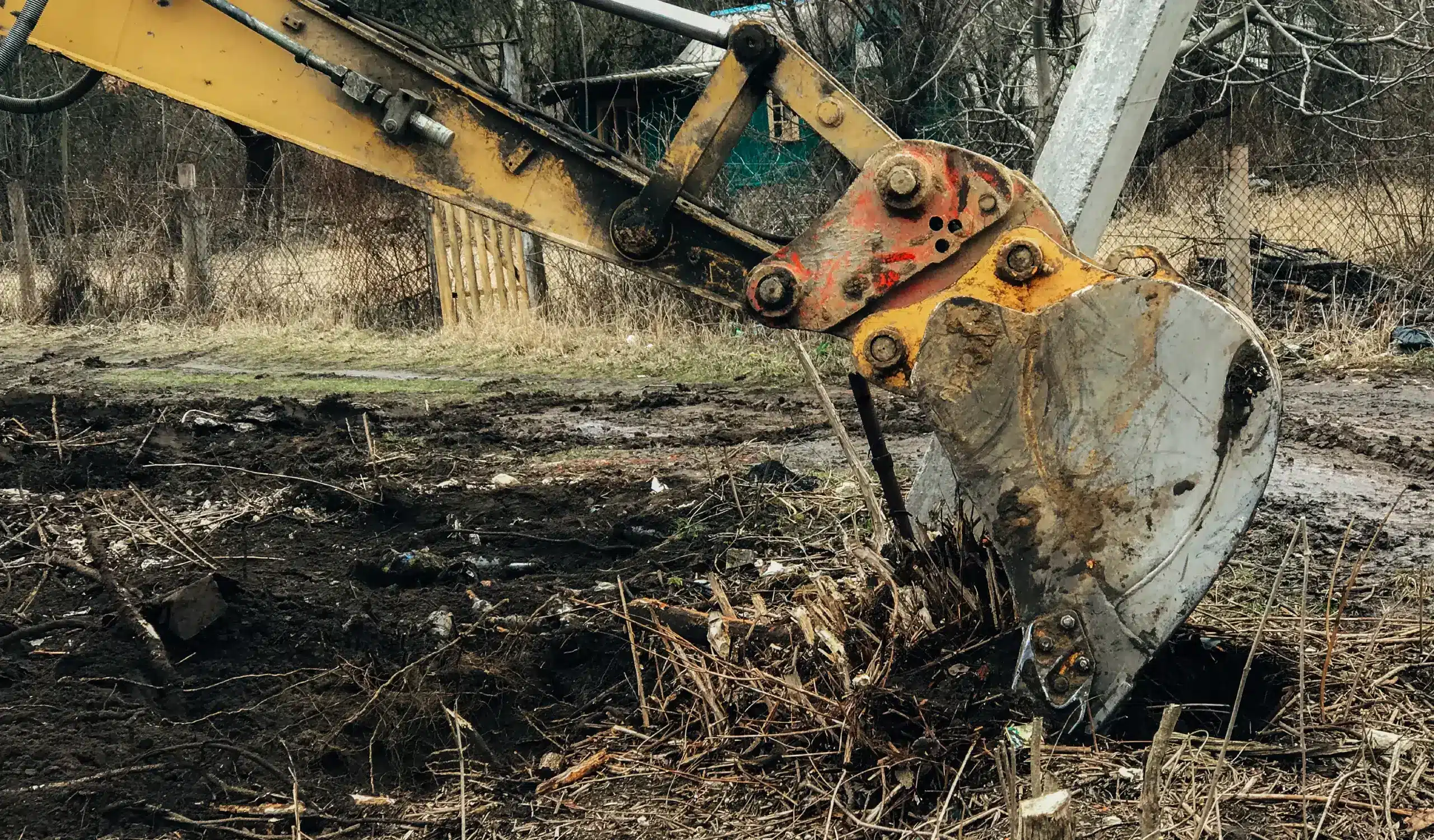
- Grind or pull stumps and roots. Leftover roots decompose over time, which can cause the ground above them to sink. A foundation poured over unremoved roots is a foundation that will likely need repair later.
- Grade and compact the building pad. This step shapes the land to the elevation your builder specified and compacts the soil so it can support a foundation without shifting.
- Get the site inspected. Most Florida counties require a final site inspection before your building permit can move to the next phase. This confirms the pad meets grading and drainage requirements.
Pro Tip: Ask your land clearing contractor for photos and GPS notes on stump grinding depth. Some builders and inspectors want proof that roots were removed to a specific depth, not just cut off at ground level.
Common Mistakes That Delay Building Permits
We regularly see property owners schedule their framing crew before grading is finished, treating clearing and grading as one step. They aren’t. Grading has to be inspected and approved before a foundation crew can safely start, and rushing that sequence is one of the fastest ways to lose time and money on a construction loan.
Did You Know: Florida’s environmental permitting rules set a minimum 25-foot upland buffer around wetlands, and local ordinances, including Brevard County’s, can require wider buffers around certain protected wetlands. Confirming which buffer applies to your lot before clearing starts can save real time on a building permit.
How Long Does It Take to Clear Land for Building?
| Lot Size | Typical Timeline (Clearing + Grading) |
| Under ½ acre, light brush | 1 day |
| ½ to 1 acre, moderate trees | 1–2 days |
| 1 to 3 acres, dense woods | 2–4 days |
| 3+ acres | 3–7 days |
These ranges cover clearing and grading combined, which takes longer than clearing alone. (See our Complete Guide to Land Clearing for clearing-only timelines by lot size.) None of this includes permit review, which adds extra time on top of the physical work, so start that process as early as you can.
Did You Know: Wet soil doesn’t compact evenly. Building pads graded during Florida’s rainy season sometimes need a second compaction pass before they’ll pass inspection.
What to Ask Your Land Clearing Contractor Before You Build
A few questions separate a contractor who understands building timelines from one who only understands clearing:
- Will the pad be compacted to my builder’s specifications, or just graded?
- Who schedules the pre-pour site inspection, you or me?
- What’s your plan if the survey finds a wetland buffer or a protected tree?
- Can you coordinate directly with my builder’s schedule?
Pro Tip: Get your contractor’s answers in writing, especially the compaction specification. A verbal agreement won’t help if your foundation crew shows up to a pad that doesn’t meet spec.
At All Pro Land Clearing, we coordinate directly with builders and surveyors on this order because a mis-timed step costs our clients more than it costs us. Our site work team picks up grading and compaction once clearing is done, and our tree removal crews handle protected species reviews before the first cut goes down.
Ready to Build on a Clear, Compacted Lot?
Clearing land for building comes down to sequence. Survey, permit, clear, grind, grade, inspect, in that order, and your site will be ready when your builder is. Skip a step, and you’ll likely pay for it in delays. For the full picture on land clearing methods and costs beyond building prep, see our Complete Guide to Land Clearing.
Ready to get your lot building-ready? Contact All Pro Land Clearing at 321-541-4547 for a free on-site assessment, or get a free quote and we’ll walk your property with your builder’s timeline in mind.
Frequently Asked Questions
What is the first step in clearing land for building?
The first step is a professional survey to mark boundaries, easements, and wetland buffers. Clearing before the survey is finished is one of the most common causes of building permit delays.
Do I need a permit before I clear land to build in Florida?
In most Florida counties, yes. In Palm Bay, removing trees from a lot over one acre requires a permit from the Planning Director, and projects near wetlands trigger additional state and county requirements.
How long does it take to clear land before building starts?
A half-acre lot with light brush usually takes about a day. A heavily wooded lot of two or more acres can take several days for clearing and grading combined, not counting permit review time.
Can I clear land myself before hiring a builder?
You can for small residential lots without permit-triggering acreage or protected trees, but grading to a builder’s exact specifications usually requires professional equipment and compaction testing.
What happens if you build without properly clearing the land first?
Leftover roots and unstable soil can cause a foundation to shift or crack over time. Most building inspectors won’t approve a foundation pour until the pad passes a compaction and grading check.